Monday, November 9, 2009

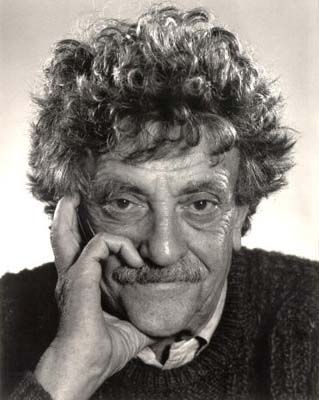
My bro Mike


Went for a trip into the wilderness and the temperature was dropping into the teens at night and our party was in desperate need of some warmth. It was either build and illegal fire or just retire to the warmth of our sleeping bags. The rap music got the best of us and we all decided to do the outlaw thing and start a fire. It was no easy task though with all the wood around us a little damp and a good wind coming through. Enter Ross King. I have to give a lot of thanks to Ross King for putting an index in the back of his book because there is no way I'd burn any of the actual pages of this book but I have to say that his index did a great job of starting a fire. Anyways, I spent the rest of the trip reading in short durations this rad book. It was pretty hard to find time to lay down and take in this story that I could read over and over again but it was definitely worth it. The great thing about this book is it isn't too heavy and is written really well. Ross really paints a good picture (nothing compared to Mike though) of the monumental process that was the frescoing of the Sistine Chapel. After reading this book I doubt I'll be able to visit Europe without making my first stop the Vatican.

He also wrote another great book about Brunelesci's dome (I think it was titled something like "Brunelesci's Dome" that is much much shorter but still a great fast read if you like history or art history.

Saturday, April 25, 2009

Life's a bitch!

Was listening to this the other day cruising back from Santa Barbara and was just digging the lyrics. Mac Dre comes extra hard on this track and his flow is unusually aggressive.

The very last bit of lyrics is extra great!

Saturday, April 11, 2009

Plagiarism at it's finest.

This short story can be found in one of the two volumes of Kurt Vonnegut's short stories. Please buy the book if you like what you read.

Kurt Vonnegut
2BR02B


Got a problem? Just pick up the phone. It solved them all—and all the same way!
2
B
R
0
2
B


--------------------------------------------------------------------------------

Everything was perfectly swell.

There were no prisons, no slums, no insane asylums, no cripples, no poverty, no wars.

All diseases were conquered. So was old age.

Death, barring accidents, was an adventure for volunteers.

The population of the United States was stabilized at forty-million souls.

One bright morning in the Chicago Lying-in Hospital, a man named Edward K. Wehling, Jr., waited for his wife to give birth. He was the only man waiting. Not many people were born a day any more.

Wehling was fifty-six, a mere stripling in a population whose average age was one hundred and twenty-nine.

X-rays had revealed that his wife was going to have triplets. The children would be his first.

Young Wehling was hunched in his chair, his head in his hand. He was so rumpled, so still and colorless as to be virtually invisible. His camouflage was perfect, since the waiting room had a disorderly and demoralized air, too. Chairs and ashtrays had been moved away from the walls. The floor was paved with spattered dropcloths.

The room was being redecorated. It was being redecorated as a memorial to a man who had volunteered to die.

A sardonic old man, about two hundred years old, sat on a stepladder, painting a mural he did not like. Back in the days when people aged visibly, his age would have been guessed at thirty-five or so. Aging had touched him that much before the cure for aging was found.

The mural he was working on depicted a very neat garden. Men and women in white, doctors and nurses, turned the soil, planted seedlings, sprayed bugs, spread fertilizer.

Men and women in purple uniforms pulled up weeds, cut down plants that were old and sickly, raked leaves, carried refuse to trash-burners.

Never, never, never—not even in medieval Holland nor old Japan—had a garden been more formal, been better tended. Every plant had all the loam, light, water, air and nourishment it could use.

A hospital orderly came down the corridor, singing under his breath a popular song:

If you don't like my kisses, honey,
Here's what I will do:
I'll go see a girl in purple,
Kiss this sad world toodle-oo.
If you don't want my lovin',
Why should I take up all this space?
I'll get off this old planet,
Let some sweet baby have my place.


The orderly looked in at the mural and the muralist. "Looks so real," he said, "I can practically imagine I'm standing in the middle of it."

"What makes you think you're not in it?" said the painter. He gave a satiric smile. "It's called 'The Happy Garden of Life,' you know."

"That's good of Dr. Hitz," said the orderly.


--------------------------------------------------------------------------------

He was referring to one of the male figures in white, whose head was a portrait of Dr. Benjamin Hitz, the hospital's Chief Obstetrician. Hitz was a blindingly handsome man.

"Lot of faces still to fill in," said the orderly. He meant that the faces of many of the figures in the mural were still blank. All blanks were to be filled with portraits of important people on either the hospital staff or from the Chicago Office of the Federal Bureau of Termination.

"Must be nice to be able to make pictures that look like something," said the orderly.

The painter's face curdled with scorn. "You think I'm proud of this daub?" he said. "You think this is my idea of what life really looks like?"

"What's your idea of what life looks like?" said the orderly.

The painter gestured at a foul dropcloth. "There's a good picture of it," he said. "Frame that, and you'll have a picture a damn sight more honest than this one."

"You're a gloomy old duck, aren't you?" said the orderly.

"Is that a crime?" said the painter.

The orderly shrugged. "If you don't like it here, Grandpa—" he said, and he finished the thought with the trick telephone number that people who didn't want to live any more were supposed to call. The zero in the telephone number he pronounced "naught."

The number was: "2 B R 0 2 B."

It was the telephone number of an institution whose fanciful sobriquets included: "Automat," "Birdland," "Cannery," "Catbox," "De-louser," "Easy-go," "Good-by, Mother," "Happy Hooligan," "Kiss-me-quick," "Lucky Pierre," "Sheepdip," "Waring Blendor," "Weep-no-more" and "Why Worry?"

"To be or not to be" was the telephone number of the municipal gas chambers of the Federal Bureau of Termination.


--------------------------------------------------------------------------------

The painter thumbed his nose at the orderly. "When I decide it's time to go," he said, "it won't be at the Sheepdip."

"A do-it-yourselfer, eh?" said the orderly. "Messy business, Grandpa. Why don't you have a little consideration for the people who have to clean up after you?"

The painter expressed with an obscenity his lack of concern for the tribulations of his survivors. "The world could do with a good deal more mess, if you ask me," he said.

The orderly laughed and moved on.

Wehling, the waiting father, mumbled something without raising his head. And then he fell silent again.

A coarse, formidable woman strode into the waiting room on spike heels. Her shoes, stockings, trench coat, bag and overseas cap were all purple, the purple the painter called "the color of grapes on Judgment Day."

The medallion on her purple musette bag was the seal of the Service Division of the Federal Bureau of Termination, an eagle perched on a turnstile.

The woman had a lot of facial hair—an unmistakable mustache, in fact. A curious thing about gas-chamber hostesses was that, no matter how lovely and feminine they were when recruited, they all sprouted mustaches within five years or so.

"Is this where I'm supposed to come?" she said to the painter.

"A lot would depend on what your business was," he said. "You aren't about to have a baby, are you?"

"They told me I was supposed to pose for some picture," she said. "My name's Leora Duncan." She waited.

"And you dunk people," he said.

"What?" she said.

"Skip it," he said.

"That sure is a beautiful picture," she said. "Looks just like heaven or something."

"Or something," said the painter. He took a list of names from his smock pocket. "Duncan, Duncan, Duncan," he said, scanning the list. "Yes—here you are. You're entitled to be immortalized. See any faceless body here you'd like me to stick your head on? We've got a few choice ones left."

She studied the mural bleakly. "Gee," she said, "they're all the same to me. I don't know anything about art."

"A body's a body, eh?" he said, "All righty. As a master of fine art, I recommend this body here." He indicated a faceless figure of a woman who was carrying dried stalks to a trash-burner.

"Well," said Leora Duncan, "that's more the disposal people, isn't it? I mean, I'm in service. I don't do any disposing."

The painter clapped his hands in mock delight. "You say you don't know anything about art, and then you prove in the next breath that you know more about it than I do! Of course the sheave-carrier is wrong for a hostess! A snipper, a pruner—that's more your line." He pointed to a figure in purple who was sawing a dead branch from an apple tree. "How about her?" he said. "You like her at all?"

"Gosh—" she said, and she blushed and became humble—"that—that puts me right next to Dr. Hitz."

"That upsets you?" he said.

"Good gravy, no!" she said. "It's—it's just such an honor."

"Ah, You admire him, eh?" he said.

"Who doesn't admire him?" she said, worshiping the portrait of Hitz. It was the portrait of a tanned, white-haired, omnipotent Zeus, two hundred and forty years old. "Who doesn't admire him?" she said again. "He was responsible for setting up the very first gas chamber in Chicago."

"Nothing would please me more," said the painter, "than to put you next to him for all time. Sawing off a limb—that strikes you as appropriate?"

"That is kind of like what I do," she said. She was demure about what she did. What she did was make people comfortable while she killed them.


--------------------------------------------------------------------------------

And, while Leora Duncan was posing for her portrait, into the waitingroom bounded Dr. Hitz himself. He was seven feet tall, and he boomed with importance, accomplishments, and the joy of living.

"Well, Miss Duncan! Miss Duncan!" he said, and he made a joke. "What are you doing here?" he said. "This isn't where the people leave. This is where they come in!"

"We're going to be in the same picture together," she said shyly.

"Good!" said Dr. Hitz heartily. "And, say, isn't that some picture?"

"I sure am honored to be in it with you," she said.

"Let me tell you," he said, "I'm honored to be in it with you. Without women like you, this wonderful world we've got wouldn't be possible."

He saluted her and moved toward the door that led to the delivery rooms. "Guess what was just born," he said.

"I can't," she said.

"Triplets!" he said.

"Triplets!" she said. She was exclaiming over the legal implications of triplets.

The law said that no newborn child could survive unless the parents of the child could find someone who would volunteer to die. Triplets, if they were all to live, called for three volunteers.

"Do the parents have three volunteers?" said Leora Duncan.

"Last I heard," said Dr. Hitz, "they had one, and were trying to scrape another two up."

"I don't think they made it," she said. "Nobody made three appointments with us. Nothing but singles going through today, unless somebody called in after I left. What's the name?"

"Wehling," said the waiting father, sitting up, red-eyed and frowzy. "Edward K. Wehling, Jr., is the name of the happy father-to-be."

He raised his right hand, looked at a spot on the wall, gave a hoarsely wretched chuckle. "Present," he said.

"Oh, Mr. Wehling," said Dr. Hitz, "I didn't see you."

"The invisible man," said Wehling.

"They just phoned me that your triplets have been born," said Dr. Hitz. "They're all fine, and so is the mother. I'm on my way in to see them now."

"Hooray," said Wehling emptily.

"You don't sound very happy," said Dr. Hitz.

"What man in my shoes wouldn't be happy?" said Wehling. He gestured with his hands to symbolize care-free simplicity. "All I have to do is pick out which one of the triplets is going to live, then deliver my maternal grandfather to the Happy Hooligan, and come back here with a receipt."


--------------------------------------------------------------------------------

Dr. Hitz became rather severe with Wehling, towered over him. "You don't believe in population control, Mr. Wehling?" he said.

"I think it's perfectly keen," said Wehling tautly.

"Would you like to go back to the good old days, when the population of the Earth was twenty billion—about to become forty billion, then eighty billion, then one hundred and sixty billion? Do you know what a drupelet is, Mr. Wehling?" said Hitz.

"Nope," said Wehling sulkily.

"A drupelet, Mr. Wehling, is one of the little knobs, one of the little pulpy grains of a blackberry," said Dr. Hitz. "Without population control, human beings would now be packed on this surface of this old planet like drupelets on a blackberry! Think of it!"

Wehling continued to stare at the same spot on the wall.

"In the year 2000," said Dr. Hitz, "before scientists stepped in and laid down the law, there wasn't even enough drinking water to go around, and nothing to eat but sea-weed—and still people insisted on their right to reproduce like jackrabbits. And their right, if possible, to live forever."

"I want those kids," said Wehling quietly. "I want all three of them."

"Of course you do," said Dr. Hitz. "That's only human."

"I don't want my grandfather to die, either," said Wehling.

"Nobody's really happy about taking a close relative to the Catbox," said Dr. Hitz gently, sympathetically.

"I wish people wouldn't call it that," said Leora Duncan.

"What?" said Dr. Hitz.

"I wish people wouldn't call it 'the Catbox,' and things like that," she said. "It gives people the wrong impression."

"You're absolutely right," said Dr. Hitz. "Forgive me." He corrected himself, gave the municipal gas chambers their official title, a title no one ever used in conversation. "I should have said, 'Ethical Suicide Studios,'" he said.

"That sounds so much better," said Leora Duncan.

"This child of yours—whichever one you decide to keep, Mr. Wehling," said Dr. Hitz. "He or she is going to live on a happy, roomy, clean, rich planet, thanks to population control. In a garden like that mural there." He shook his head. "Two centuries ago, when I was a young man, it was a hell that nobody thought could last another twenty years. Now centuries of peace and plenty stretch before us as far as the imagination cares to travel."

He smiled luminously.

The smile faded as he saw that Wehling had just drawn a revolver.

Wehling shot Dr. Hitz dead. "There's room for one—a great big one," he said.

And then he shot Leora Duncan. "It's only death," he said to her as she fell. "There! Room for two."

And then he shot himself, making room for all three of his children.

Nobody came running. Nobody, seemingly, heard the shots.

The painter sat on the top of his stepladder, looking down reflectively on the sorry scene.


--------------------------------------------------------------------------------

The painter pondered the mournful puzzle of life demanding to be born and, once born, demanding to be fruitful ... to multiply and to live as long as possible—to do all that on a very small planet that would have to last forever.

All the answers that the painter could think of were grim. Even grimmer, surely, than a Catbox, a Happy Hooligan, an Easy Go. He thought of war. He thought of plague. He thought of starvation.

He knew that he would never paint again. He let his paintbrush fall to the drop-cloths below. And then he decided he had had about enough of life in the Happy Garden of Life, too, and he came slowly down from the ladder.

He took Wehling's pistol, really intending to shoot himself.

But he didn't have the nerve.

And then he saw the telephone booth in the corner of the room. He went to it, dialed the well-remembered number: "2 B R 0 2 B."

"Federal Bureau of Termination," said the very warm voice of a hostess.

"How soon could I get an appointment?" he asked, speaking very carefully.

"We could probably fit you in late this afternoon, sir," she said. "It might even be earlier, if we get a cancellation."

"All right," said the painter, "fit me in, if you please." And he gave her his name, spelling it out.

"Thank you, sir," said the hostess. "Your city thanks you; your country thanks you; your planet thanks you. But the deepest thanks of all is from future generations."


--------------------------------------------------------------------------------

THE END

Thursday, April 9, 2009

Mr. Yann Martel, they got you all wrong!


So I grabbed The Life of Pi when I headed out the other day and read the last 20 or so pages and I have to tell you it is a really really great book. The funny thing is that the book itself is a great story that gives you an amazing perspective on religion and yet, all the praise on the back of the cover doesn't even mention that aspect. The insights that the reviewers give about the book seem to me to have been written by people who barely read the first chapter and decided to put the book down, either that or they are about as deep as a rain puddle and just didn't put any though into the book they were reviewing.

Anyways, even though the reviewers your publisher put on the back of your book might be dim and have taken different things from your writing, I'm glad you wrote this book Yann, it's a good one.

Wednesday, April 8, 2009

I'm On A Boat (ft. T-Pain) - Album Version

Ok everybody, this is the el dope de.


Monday, April 6, 2009

Planet of the Apes

So right here is an article about a chimp who stockpiles rocks to throw at humans.

Kinda eerie with the whole thing a couple months ago with the chimp who went crazy on the woman.

For the people out there who aren't as well versed as me in the Planet of the Apes movies, Aldo was the first chimp in the story to say "no" to humans (a plague killed all cats and dogs on earth so humans turned to chimps as pets and eventually used them as slaves). The story eventually builds that humans are not allowed to say "no" to apes because while they were enslaved, that's all the chimps ever heard from the humans.

Here is the original ending to "Conquest of the Planet of the Apes", a one hundred percent different version then the edited one.


I guess they changed it to try to get a G rating.

Now enjoy this great clip from The Simpsons, enjoy:

Saturday, April 4, 2009

Safe and Sound

I gotta give it up to my homeboy Jake for starting his blog and motivating me to start writing on mine again.

Cruising through the used bookstore the other day with Ash-gnar and we found a sick cd for $3. Dj Quik is my favorite all-time rapper and Safe and Sound is one of my favorite CD's.

Love the jerry curls and the old school Compton style. One of the funkiest rappers ever and the first to sign a six figure record deal. Enjoy my favorite song from my latest acquisition.

Saturday, November 8, 2008

RIP Earthworm

I'm sitting on the bench at the bus stop right now and there has been a massacre of epic proportions, or maybe a mass suicide, I can't tell.


Thousands of earth worms have crawled out of the grass and have stranded themselves on the sidewalk.


Approaching the scene I saw them littered along the sidewalk, at first confusing them with just plant matter but upon a secondary inspection realizing that they were dead soldiers on a battlefield of cement.


Amongst the thousands I saw just one still writhing. Threshing about amongst all his dead brethren. I was able to do my part and flick him back into the grass but upon realizing that none of the worms had seemed to want to be in the grass-having apparently fled in such massive numbers-I was left to wonder whether I was doing more harm then good.


I krept away after watching the survivor squirm under a blade of grass, careful not to disturb the dead. I was careful too, I didn't step on one worm as I picked my way through the scene.


Now as I sit here on this bench I have to wonder: Where are all the birds? This should be their Saturday morning buffet.

Thursday, November 6, 2008

Escape From the Planet of the Apes

This is the follow up to one of my favorite movies of all time. I love the apes.

"Don't trust anyone over 30"

Honestly, if you ever see this scheduled on TCM then you'd better TiVo it so you can watch it because it's a good one.

Monday, November 3, 2008

Indy


My friend Indy is great, but he's kind of a pussy because he can't stand snakes.

Thursday, October 30, 2008

Flannery O'Connor

I walked over to the bookstore today, across Sunflower and over the 'Unity Bridge' (has to be the gayest name for a bridge ever, not that there is anything wrong with that-vote no on 8) past the Rolex display case that had a new watch in it with a walnut face and all diamond dial that I will buy one day and into the bookstore.


I took the escalator up to the second floor and went straight to the V's to re-read 'God Bless you Dr. Kevorkian' but upon pulling it out I thought better of it and put it back.


Do you know what the brushes on escalators are for? I do now. It was on the today show but that's not where I found out about it. I learnt it from a book.


After putting 'God Bless You ...' back in its place I went to the O's and pulled from the shelves 'Everything That Rises Must Converge'.


I took it to an empty desk I found and started to read the introduction. I quickly learnt that though her stories are some of my favorites I couldn't give two shits about Flannery's life story. So i turned to the first page of the book, page 1.

Thursday, October 23, 2008

My Life


The Game came out with this rap song a couple weeks (months?) ago and though I hate Lil' Wayne, the Game has some pretty good lyrics.

Amongst my favorites--especially to sing out in the lineup--is "We are not the same, I am a martian; So approach my phantom doors with caution."

You know what I like about The Game? He goes there. He was arrested for pulling out a gun at a pick-up basketball game in longbeach. Now most of you literaties out there who might be reading this blog for my insightful literary reviews will probably scoff at that as "low" or "detestable" but I ask of you: What is the difference between that and a Cowboy pulling out a revolver during a poker game in the 1880's? We all laud over Val fucking Kilmer because he's a cowboy, and cheer kids on when they choose to be the cowboy in cowboy and indians games but a black man does this now and it is despicable.

More old west style regulation I say.

Reminds me of a point I heard my grandpa make. He said that the reason chivalry and conduct was so important two centuries ago was because everyone was capable of carrying firearms and at any time you could be put into place by a Colt revolver if you stepped out of line--so people didn't.

Sunday, October 5, 2008

Back Again

I am back yo.

I guess it is only applicable that I do the usual 20th century lit ball washing and get down to business telling you all how much I enjoyed "Hocus Pocus" just now. Kurt did a good one this time. It is a light read and I think I will need to read it again but for now I recommend it to be read and check back soon for whenever I re-read it so I can give some actual insight into it--or, never mind, you guys probably aren't looking for my insight so I will end this all with this: read "Hocus Pocus" by Kurt Vonnegut, it is worth it.

Tuesday, August 19, 2008

Delusions of granduer

Come on, just cause I get five people a day reading this thing I'm now thinking I'm hot shit. What a good writer I am. Well, thanks to all you five people. I'm sure not one of you is into the rap element of this blog so right here and right now, I promise to put up a post with another youtube video of another rap song--just to alienate you all just a little more.

If its any consolation, my girlfriend thinks I'm full of shit too and hates that I love rap music.

Monday, August 18, 2008

Me and Richard Parker


The thing about this book is that on the cover it has reviews by many publications and more than one cites the book as a fantastic defense of zoos and I can't help but think that the reviewers completely missed the boat (no pun intended for those who have read the book) on what this book is about. It is a deep look into the world of religion and the practicalities of a world where exposure to every religion known to man from here to almost eternity. Deeply metaphysical this book is an unbelievable read that kept me interested until the very end upon which I was left scratching my head trying to contemplate the questions evoked by the author.
I highly suggest you run out right now--it is only 10 pm as I write this and I know Barnes and Noble is still open for another hour--and buy this book and begin reading it and do whatever it takes to avoid the trappings of merely taking the story of face value as those so wrong reviewers did and delve into the metaphorical. Yann wrote a masterpiece for us readers and he deserves the courtesy and respect that we should read the book and try to understand at least all that he meant for us to and hopefully more than that.

You can expect some more entries on this book in a little while. Read it and wait for my oh-so-intelligent-wannabe-literate writings about it as I finish The Cave by Jose Saramago (I know, I started that book a couple month ago but I got sidetracked by that hoosier Kurt and his great book Timequake.).

Sunday, August 17, 2008

More ballwashing for Kurt.

A little more ballwashing but I promise tomorrow I will have a new book to tell you all about from a new author, it is a really good one and couldn't get the pictures to upload via my blackberry so I had to save it until I got home and I am home now but this little excerpt from the book I just finished for the second time around seemed for some reason very appropriate to my mood.


"At ten o'clock the old, long-out-of-print science fiction writer announced it was his bedtime. There was one last thing he wanted to say to us, to his family. Like a magician seeking a volunteer from the audience, he asked someone to stand beside him and do what he said. I held up my hand. "Me, please, me," I said.

The crowd fell quiet as I took my place to his right.

"The universe has expanded so enormously," he said, "with the exception of the minor glitch it put us through, that light is no longer fast enough to make any trips worth taking in even the most unreasonable lengths of time. Once the fastest thing possible, they say, light now belongs in the graveyard of history, like the Pony Express.

"I now ask this human being brave enough to stand next to me to pick two twinkling points of obsolete light in the sky above us. It doesn't matter what they are, except that they must twinkle. If they don't twinkle, they are either planets or satellites. Tonight we are not interested in planets or satellites."

I picked two points of light maybe ten feet apart. One was Polaris. I have no idea what the other one was. For all I knew, it was Puke, Trout's star the size of a BB.

"Do they twinkle?" he said.

"Yes they do," I said.

"Promise?" he said.

"Cross my heart," I said.

"Excellent! Ting-a-ling!" he said. "Now then: Whatever heavenly bodies those two glints represent, it is certain that for light to go from one to the other would take thousands or millions of years. Ting-a-ling? But I now ask you to look precisely at one, and then precisely at the other."

"Ok," I said, "I did it."

"It took a second, do you think?" he said.

"No more," I said.

"Even if you'd taken an hour," he said, "something would have passed between where those two heavenly bodies used to be, at, conservatively speaking, a million times the speed of light."

"What was it?" I said.

"Your awareness," he said. "that is a new quality in the Universe, which exists only because there are human beings. Physicists must from now on, when pondering the secrets of the Cosmos, factor in not only energy and matter and time, but something very new and beautiful, which is human awareness."

Trout paused, ensuring with the ball of his left thumb that his upper dental plate would not slip when he said his last words to us that enchanted evening.

All was well with his teeth. This was his finale: "I have thought of a better word than awareness," he said. "Let us call it soul." He paused." (excerpt from Timequake by Kurt Vonnegut [pg241-242])

Deep huh?


Thursday, August 14, 2008

My favorite movie ...

of all time I think.

Captain Nemo and the Underwater City

Note: Right click on the different parts and open them in a new window for the best viewing.


Jeremy is a reefer addict

Jeremy is a reefer addict. The year is two thousand and eight anno domini and no one calls marijuana reefer anymore, but whatever you call it, Jeremy is addicted to it. Jeremy, like all other humans, has a great big brain full of neurons and chemicals that is capable of producing wonderfully complicated thoughts. In fact, Jeremy's brain is so sophisticated that even though he lives in the age of electronic wisdom, his brain--just like every other humans--is capable of putting to shame anything a silicon chip thinks it might be hot shit for being able to do.

An example: just by looking at a picture of a scantily clad lady laying on the beach he can instantly recognize exactly which supermodel she is and can immediately respond with the thought "I want to have sex with her." Let's see a silicon chip do that.

It's this big brain of his though that keeps him smoking reefer. You see, Jeremy is prone--just like every other human being--to deep complicated thoughts. The problem lies in the fact that Jeremy can't for the life of him figure out what good these thoughts are. Sure Galileo and Newton and Pythagoras had the same sort of complicated thoughts, but Jeremy's brain isn't thinking about celestial bodies or hypothetical mathematics, rather, Jeremy's big huge brain is constantly pestering him with ideas such as "Why am I here?", or "Why am I doing this?", or the big kicker of them all, "What does this all lead to?".

You see, the problem is, these thoughts are just as annoying as they are dangerous. People around the world have gotten into lots of trouble, for themselves and others, just because they were born with their own personal big brain inside their heads. The shame is that these people more often then not have too much thinking capacity and often get themselves into trouble simply by thinking too much. Not Jeremy, he's no fool. Sure he might indulge in the rare philosophical thought but rather than be swept away by them he simply chooses to hit the off switch and indulge instead in the sweet numbness that something as simple as plant leaves encased in tissue paper can offer.

Jeremy is as happy as can be keeping himself protected from the damage that the overindulgence of that big brain of his can inflict. Rather, he keeps his brain firing on half of it's cylinders and wanders through life comfortably numb to the complications of the world and as happy as a lark.

Wednesday, August 13, 2008

What Kurt Did ...


Kurt is somewhere up in heaven having a blast right now. What he did was more than write; what he did was--through all the words and sentences he strung together--to define what it is to be human. It took him his whole life, but through his stories and novels a reader can begin to conceptualize what it is to be human. I have yet to encounter any author who has been able to so clearly and concisely tackle the subject of being alive. All of life's little ironies and contradictions are innumerable, and yet, Kurt was able to see many of these and through his clunky old typewriter help anyone who happened to read what he wrote to begin to conceive just exactly why they were here on this great earth.

I know it is such a great terrible tragedy to be "po-mo" but I offer you this little piece of advice and hope that you take it, no matter how hipster it may seem: read anything by Kurt Vonnegut, it will make you feel so much better about being a human being.

In the process of defining what it is to be human, Kurt achieves one of his greatest accomplishments--or at least what I will consider his greatest accomplishment. You see, through Kurt's writing he relishes what it is to be a person in this world and breaks down to the very core our existence in this modern era. We no longer live in the world of Shakespeare or Aristotle; we live in the world of Vonnegut. This new world we have invented for ourselves seems ever more difficult for us to find a place in it and though this great author clearly views our present human condition with disdain, make no mistake that his sympathy is with us.

His legacy will live forever as the man who has helped a whole new era of people discover themselves and their place in this world; and he made us laugh the whole way through.

Thank you Kurt.

Monday, August 11, 2008

For you Mr. President

As we all know, my friend John is a bad ass. This one goes out to you GW and a big middle finger to your latest and greatest proposition.

"

It is impossible to overestimate the value of wild mountains and mountain temples as places for people to grow in, recreation grounds for soul and body. They are the greatest of our natural resources, God's best gifts, but none, however high and holy, is beyond reach of the spoiler. In these ravaging money-mad days monopolizing San Francisco capitalists are now doing their best to destroy the Yosemite Park, the most wonderful of all our great mountain national parks. Beginning on the Tuolumne side, they are trying with a lot of sinful ingenuity to get the Government's permission to dam and destroy the Hetch-Hetchy Valley for a reservoir, simply that comparatively private gain may be made out of universal public loss, while of course the Sierra Club is doing all it can to save the valley. The Honorable Secretary of the Interior has not yet announced his decision in the case, but in all that has come and gone nothing discouraging is yet in sight on our side of the fight.

As long as the busy public in general knew little or nothing about the Hetch-Hetchy Valley, the few cunning drivers of the damming scheme, working in darkness like moles in a low-lying meadow, seemed confident of success; but when light was turned on and the truth became manifest that next to Yosemite, Hetch-Hetchy is the most wonderful and most important feature of the great park, that damming it would destroy it, render it inaccessible, and block the way through the wonderful Tuolumne Cañon to the grand central campground in the upper Tuolumne Valley, thousands from near and far came to our help, -- mountaineers, nature-lovers, naturalists. Most of our thousand club members wrote to the President or Secretary protesting against the destructive reservoir scheme while other sources of city water as pure or purer than the Hetch-Hetchy were available; so also did the Oregon and Washington mountaineering clubs and the Appalachian of Boston and public-spirited citizens everywhere. And the President, recognizing the need of beauty as well as bread and water in the life of the nation, far from favoring the destruction of any of our country's natural wonder parks and temples, is trying amid a host of other cares to save them all. Within a very short time he has saved the petrified forests of Arizona and the Grand Cañon, and in our own State the jagged peaks of San Benito county known as "The Pinnacles," making them national monuments or parks to be preserved for the people forever. None, therefore, need doubt that everything possible will be done to save Hetch-Hetchy.

After my first visit, in the autumn of 1871, I have always called it the Tuolumne Yosemite, for it is a wonderfully exact counterpart of the great Yosemite, not only in its crystal river and sublime rocks and waterfalls, but in the gardens, groves, and meadows of its flower park-like floor. The floor of Yosemite is about 4,000 feet above the sea, the Hetch -Hetchy floor about 3,700; the walls of both are of gray granite, rise abruptly out of the flowery grass and groves are sculptured in the same style, and in both every rock is a glacial monument.

Standing boldly out from the south wall is a strikingly picturesque rock called "Kolana" by the Indians, the outermost of a group 2300 feet high, corresponding with the Cathedral Rocks of Yosemite both in relative position and form. On the opposite side of the Valley, facing Kolana, there is a counterpart of the El Capitan of Yosemite rising sheer and plain to a height of 1800 feet, and over its massive brow flows a stream which makes the most graceful fall I have ever seen. From the edge of the cliff it is perfectly free in the air for a thousand feet, then breaks up into a ragged sheet of cascades among the boulders of an earthquake talus. It is in all its glory in June, when the snow is melting fast, but fades and vanishes toward the end of summer. The only fall I know with which it may fairly be compared is the Yosemite Bridal Veil; but it excels even that favorite fall both in height and fineness of fairy-airy beauty and behavior. Lowlanders are apt to suppose that mountain streams in their wild career over cliffs lose control of themselves and tumble in a noisy chaos of mist and spray. On the contrary, on no part of their travels are they more harmonious and self-controlled. Imagine yourself in Hetch Hetchy on a sunny day in June, standing waist-deep in grass and flowers (as I have oftentimes stood), while the great pines sway dreamily with scarce perceptible motion. Looking northward across the Valley you see a plain, gray granite cliff rising abruptly out of the gardens and groves to a height of 1800 feet, and in front of it Tueeulala's silvery scarf burning with irised sun-fire in every fiber. In the first white outburst of the stream at the head of the fall there is abundance of visible energy, but it is speedily hushed and concealed in divine repose, and its tranquil progress to the base of the cliff is like that of downy feathers in a still room. Now observe the fineness and marvelous distinctness of the various sun-illumined fabrics into which the water is woven; they sift and float from form to form down the face of that grand gray rock in so leisurely and unconfused a manner that you can examine their texture, and patterns and tones of color as you would a piece of embroidery held in the hand. Near the head of the fall you see groups of booming, comet-like masses, their solid, white heads separate, their tails like combed silk interlacing among delicate shadows, ever forming and dissolving, worn out by friction in their rush through the air. Most of these vanish a few hundred feet below the summit, changing to the varied forms of cloud-like drapery. Near the bottom the width of the fall has increased from about twenty-five to a hundred feet. Here it is composed of yet finer tissues, and is still without a trace of disorder -- air, water and sunlight woven into stuff that spirits might wear.

So fine a fall might well seem sufficient to glorify any valley; but here, as in Yosemite, Nature seems in nowise moderate, for a short distance to the eastward of Tueeulala booms and thunders the great Hetch Hetchy Fall, Wapama, so near that you have both of them in full view from the same standpoint. It is the counterpart of the Yosemite Fall, but has a much greater volume of water, is about 1700 feet in height, and appears to be nearly vertical, though considerably inclined, and is dashed into huge outbounding bosses of foam on the projecting shelves and knobs of its jagged gorge. No two falls could be more unlike -- Tueeulala out in the open sunshine descending like thistledown; Wapama in a jagged, shadowy gorge roaring and plundering, pounding its way with the weight and energy of an avalanche. Besides this glorious pair there is a broad, massive fall on the main river a short distance above the head of the Valley. Its position is something like that of the Vernal in Yosemite, and its roar as it plunges into a surging trout-pool may be heard a long way, though it is only about twenty feet high. There is also a chain of magnificent cascades at the head of the valley on a stream that comes in from the northeast, mostly silvery plumes, like the one between the Vernal and Nevada falls of Yosemite, half-sliding,half-leaping on bare glacier polished granite, covered with crisp clashing spray into wish the sunbeams pour with glorious effect. And besides all these a few small streams come over the walls here and there, leaping from ledge to ledge with birdlike song and watering many a hidden cliff-garden and fernery, but they are too unshowy to be noticed in so grand a place.

The correspondence between the Hetch Hetchy walls in their trends, sculpture, physical structure, and general arrangement of the main rock-masses [and those of the Yosemite Valley] has excited the wondering admiration of every observer. We have seen that the El Capitan and Cathedral rocks occupy the same relative positions In both valleys; so also do their Yosemite Points and North Domes. Again that part of the Yosemite north wall immediately to the east of the Yosemite Fall has two horizontal benches timbered with golden-cup oak about 500 and 1500 feet above the floor. Two benches similarly situated and timbered occur on the same relative portion of the Hetch Hetchy north wall, to the east of Wapama Fall, and on no other. The Yosemite is bounded at the head by the great Half Dome. Hetch Hetchy is bounded in the same way though its head rock is far less wonderful and sublime in form.

The floor of the Valley is about three and a half miles long and from a fourth to half a mile wide. The lower portion is mostly a level meadow about a mile long, with the trees restricted to the sides, and partially separated from the upper forested portion by a low bar of glacier-polished granite across which the river breaks in rapids.

The principal trees are the yellow and sugar pines, Sabine pine, incense cedar, Douglas spruce, silver fir, the California and gold-cup oaks, balm of Gilead poplar, Nuttall's flowering dogwood, alder, maple, laurel, tumion, etc. The most abundant and influential are the great yellow pines, the tallest over two hundred feet in height, and the oaks with massive rugged trunks four to six or seven feet in diameter, and broad arching heads, assembled in magnificent groves. The shrubs forming conspicuous flowery clumps and tangles are manzanita, azalea, spiraea, brier-rose, ceanothus, calycanthus, philadelphus, wild cherry, etc.; with abundance of showy and fragrant herbaceous plants growing about them or out In the open in beds by themselves -- lilies, Mariposa tulips, brodiaeas, orchids -- several species of each,-- iris, spraguea, draperia, collomia, collinsia, castilleia, nemophila, larkspur, columbine, goldenrods, sunflowers, and mints of many species, honeysuckle, etc. etc. Many fine ferns dwell here also, especially the beautiful and interesting rock-ferns -- pellaea, and cheilanthes of several species -- fringing and rosetting dry rock-piles and ledges; woodwardia and asplenium on damp spots with fronds six or seven feet high; the delicate maidenhair in mossy nooks by the falls, and the sturdy, broad-shouldered pteris beneath the oaks and pines.

It appears therefore that Hetch-Hetchy Valley, far from being a plain, common, rock-bound meadow, as many who have not seen it seem to suppose, is a grand landscape garden, one of Nature's rarest and most precious mountain mansions. As in Yosemite, the sublime rocks of its walls seem to the nature-lover to glow with life, whether leaning back in repose or standing erect in thoughtful attitudes, giving welcome to storms and calms alike. And how softly these mountain rocks are adorned, and how fine and reassuring the company they keep --their brows in the sky, their feet set in groves and gay emerald meadows, a thousand flowers leaning confidingly against their adamantine bosses, while birds, bees, and butterflies help the river and waterfalls to stir all the air into music -- things frail and fleeting and types of permanence meeting here and blending, as if into this glorious mountain temple Nature had gathered here choices treasures, whether great or small, to draw her lovers into close confiding communion with her.

Strange to say, this is the mountain temple that is now in danger of being dammed and made into a reservoir to help supply San Francisco with water and light. This use of the valley, so destructive and foreign to its proper park use, has long been planned and prayed for, and is still being prayed for by the San Francisco board of supervisors, not because water as pure and abundant cannot be got from adjacent sources outside the park - for it can, -- but seemingly only because of the comparative cheapness of the dam required.

Garden- and park-making goes on everywhere with civilization, for everybody needs beauty as well as bread, places to play in and pray in, where Nature may heal and cheer and give strength to body and soul. This natural beauty-hunger is displayed in poor folks' window-gardens made up of a few geranium slips in broken cups, as well as in the costly lily gardens of the rich, the thousands of spacious city parks and botanical gardens, and in our magnificent National parks -- the Yellowstone, Yosemite, Sequoia, etc. -- Nature's own wonderlands, the admiration and joy of the world. Nevertheless, like everything else worth while, however sacred and precious and well-guarded, they have always been subject to attack, mostly by despoiling gainseekers, -- mischief-makers of every degree from Satan to supervisors, lumbermen, cattlemen, farmers, etc., eagerly trying to make everything dollarable, often thinly disguised in smiling philanthropy, calling pocket-filling plunder "Utilization of beneficent natural resources, that man and beast may be fed and the dear Nation grow great." Thus long ago a lot of enterprising merchants made part of the Jerusalem temple into a place of business instead of a place of prayer, changing money, buying and selling cattle and sheep and doves. And earlier still, the Lord's garden in Eden, and the first forest reservation, including only one tree, was spoiled. And so to some extent have all our reservations and parks. Ever since the establishment of the Yosemite National Park by act of Congress, October 8, 1890, constant strife has been going on around its borders and I suppose this will go on as part of the universal battle between right and wrong, however its boundaries may be shorn or its wild beauty destroyed. The first application to the Government by the San Francisco Supervisors for the use of Lake Eleanor and the Hetch Hetchy Valley was made in 1903, and denied December 22nd of that year by the Secretary of the Interior. In his report on this case he well says: "Presumably the Yosemite National Park was created such by law because of the natural objects, of varying degrees of scenic importance, located within its boundaries, inclusive alike of its beautiful small lakes, like Eleanor, and its majestic wonders, like Hetch-Hetchy and Yosemite Valley. It is the aggregation of such natural scenic features that makes the Yosemite Park a wonderland which the Congress of the United States sought by law to preserve for all coming time as nearly as practicable in the condition fashioned by the hand of the Creator -- a worthy object of national pride and a source of healthful pleasure and rest for the thousands of people who may annually sojourn there during the heated months."

The most delightful and wonderful campgrounds in the Park are the three great valleys -- Yosemite, Hetch-Hetchy, and Upper Tuolumne; and they are also the most important places with reference to their positions relative to the other great features -- the Merced and Tuolumne Cañons, and the High Sierra peaks and glaciers, etc., at the head of the rivers. The main part of the Tuolumne Valley is a beautiful spacious flowery lawn four or five miles long, surrounded by magnificent snowy mountains. It is about 8500 feet above the sea, and forms the grand central High Sierra camp ground from which excursions are made to the noble mountains, domes, glaciers, etc.; across the Range to the Mono Lake and volcanoes and down the Tuolumne Cañon to Hetch Hetchy. But should Hetch Hetchy be submerged, as pro-posed, not only would it be made utterly inaccessible, but the sublime cañon way to the heart of the High Sierra would be hopelessly blocked. None, as far as I have learned, of all the thousands who have seen the park is in favor of this destructive water scheme.

My last visit to the Valley was made in the autumn of last year [1907], with William Keith, the artist. The leaf-colors were then ripe, and the great godlike rocks in repose seemed to glow with life. The artist, under their spell, wandered day after day along the beautiful river and through the groves and gardens, studying the wonderful scenery; and, after making about forty sketches, declared with enthusiasm that in picturesque beauty and charm Hetch Hetchy surpassed even Yosemite.

That any one would try to destroy such a place seemed impossible; but sad experience shows that there are people good enough and bad enough for anything. The proponents of the dam scheme bring forward a lot of bad arguments to prove that the only righteous thing for Hetch-Hetchy is its destruction. These arguments are curiously like those of the devil devised for the destruction of the first garden -- so much of the very best Eden fruit going to waste; so much of the best Tuolumne water. Very few of their statements are even partly true, and all are misleading. Thus, Hetch Hetchy, they say, is a "low-lying meadow."

On the contrary, it is a high-lying natural landscape garden.

"It is a common minor feature, like thousands of others."

On the contrary, it is a very uncommon feature; after Yosemite, the rarest and in many ways the most important in the park.

"Damming and submerging it 175 feet deep would enhance its beauty by forming a crystal-clear lake."

Landscape gardens, places of recreation and worship, are never made beautiful by destroying and burying them. The beautiful lake, forsooth, should be only an eyesore, a dismal blot on the landscape, like many others to be seen in the Sierra. For, instead of keeping it at the same level all the year, allowing Nature to make new shores, it would, of course, be full only a month or two in the spring, when the snow is melting fast; then it would be gradually drained, exposing the slimy sides of the basin and shallower parts of the bottom, with the gathered drift and waste, death and decay of the upper basins, caught here instead of being swept on to decent natural burial along the banks of the river or in the sea. Thus the Hetch Hetchy dam-lake would be only a rough imitation of a natural lake for a few of the spring months, an open mountain sepulcher for the others.

"Hetch Hetchy water is the purest, wholly unpolluted, and forever unpollutable."

On the contrary, excepting that of the Merced below Yosemite, it is less pure than that of most of the other Sierra streams, because of the sewerage of camp grounds draining into it, especially of the Big Tuolumne Meadows campgrounds, where hundreds of tourists and mountaineers, with their animals, are encamped for months every summer, soon to be followed by thousands of travelers from all the world.

These temple destroyers, devotees of ravaging commercialism, seem to have a perfect contempt for Nature, and, instead of lifting their eyes to the mountains, lift them to dams and town skyscrapers.

Dam Hetch-Hetchy! As well dam for water-tanks the people's cathedrals and churches, for no holier temple has ever been consecrated by the heart of man." -- John Muir